By Danielle Rivas

The prominence of social media in contemporary society has become one of the most important forces of change. It shows how we are so reliant on technology that it affects how people interact. The case of Orkut, particularly as it was used in Brazil, showed how much these platforms can influence cultural aspects.
What is Orkut, you may ask?
Orkut was a pioneer social networking site that was launched in 2004 and closed in 2014. At its peak, the platform had over 300 million users worldwide. The platform was overwhelmingly popular in Brazil, whose residents contributed 90% of page views on the platform.
This social networking site allowed users to search and find communities, including checking other users’ membership. The communities were a fundamental part of the platform, with 1,500,000 communities formed within the first year of its launch.
Honestly, it is surprising that such a platform failed to survive to date, given how much potential it had.
Looking at Orkut’s community structure reveals a significant change in digital consumer patterns. No longer do people simply go online to look for information. They are instead active participants in choosing what they want to interact with when they go online.
Brazilians valued these communities so much that Orkut became a premium marketing platform.
Consumers preferred this participation over a diffusion strategy. They could rely on each other’s experience to learn about products or individuals. It was faster, spoke on the brand’s legitimacy to be recommended, and was more engaging for consumers.
On the other hand, Brazilian culture shifted to a greater reliance on social networking. This change highlighted brands’ need to invest in online engagement. This was necessary to reach desired consumers.
On the other hand, interactions in these communities showed how quickly online identities were becoming for individuals. The friends rating system on the platform influenced how people behaved online. Users were more cautious about their image on these platforms, which affected their conduct.
In such a culture, companies must learn to interact with their customers online to improve engagement. Dedicated social media initiatives will ensure faster responses. They will also allow easier management of crises. Additionally, they enable better collection of feedback. All of these can be a basis for formulating more effective marketing and competition strategies.
Orkut made significant advancements from 2004 to 2014. This impact has grown as more people use social media worldwide. There are 5.24 billion active social media user identities worldwide.
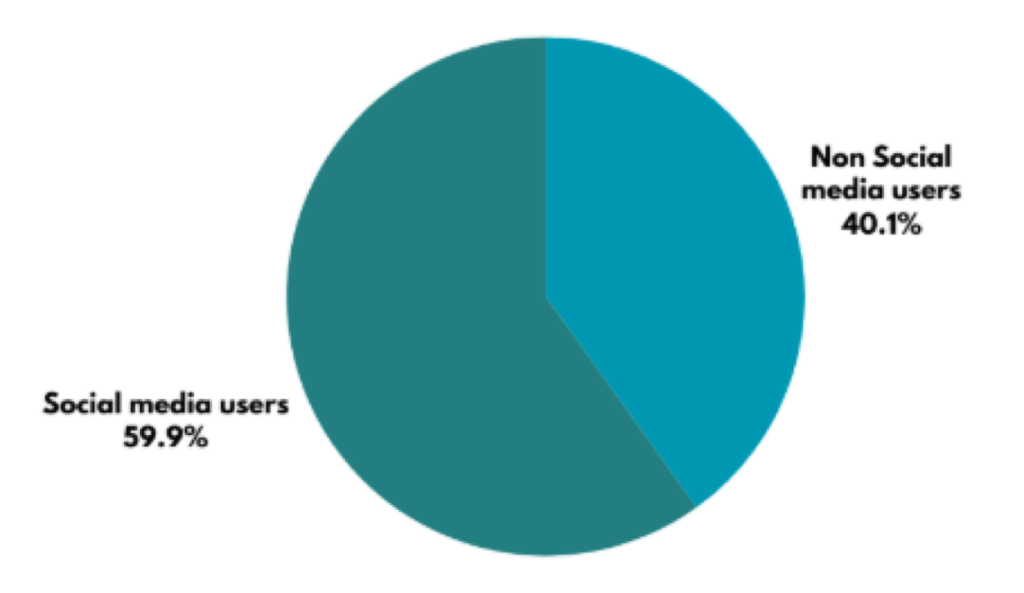
59.9% of the global population uses social media.
With the majority of the world’s population using social media, companies are forced to formulate effective online strategies.
The prominence of these platforms influences how people interact. It has also led to the emergence of unique trends that affect societal values. Thus, the modern firm must contend with how it responds to these ideals or public expectations online. Failure to do so risks losing substantial market share because of the accompanying negative publicity.
So what can modern firms do to address this shift?
The case of Orkut and how companies adapted to its popularity in Brazil shows valuable insights. There is substantial potential to capitalize on these platforms.
It starts with using this vast network of people to promote the brand. The next step should be managing one’s online image to avoid undesired attention while also communicating what the brand represents. The final step is to continually engage consumers to understand them, provide feedback, offer solutions, provide information, and promote the product.

A good social media strategy can be the difference between falling for a scandal online and running the best possible campaigns. A company must thus handle its online activities with caution to minimize the risk factors that come with such technologies.
 Danielle Rivas